




440C Stainless Steel: Properties, Applications, Equivalent Grades & Specifications
When it comes to high-performance materials that possess high strength, hardness, and corrosion resistance, 440C stainless steel is one of the most reliable materials in the family of stainless steel materials.
440C is a type of martensitic stainless steel that has high carbon content, high wear resistance, and high hardness after heat treatment. It is a magnetic stainless steel material that has a wide range of applications in various industries due to its magnetic properties.
This type of stainless steel material is used in industries that deal in precision engineering, manufacturing, and tooling industries. It is used in various applications that require high durability and high strength, with high edge retention capacity. It is available in various forms such as wire, bar, and rod in the market and is manufactured as per international standards such as ASTM and UNS.
In this article, we will discuss all aspects of the material that you need to know about AISI 440C stainless steel material.
What is 440C Stainless Steel?
High-carbon martensitic stainless steel, or 440C stainless steel, is known for its hardness and resistance to wear.
It is a magnetic stainless steel that is capable of undergoing a heat treatment procedure to attain high mechanical properties, unlike austenitic stainless steel.
440C stainless steel is renowned for:
- Its high hardness level, which is a result of a heat treatment procedure
- Its resistance to corrosion
- Its resistance to wear
- Its extended service life
440C Stainless Steel Chemical Composition
The performance of 440C Stainless Steel is largely defined by its chemical composition:
| Element | Composition % |
| Carbon (C) | 0.95 - 1.20 |
| Chromium | 16.0 - 18.0 |
| Molybdenum | 0.75 |
| Manganese | 1.0 |
| Silicon | 1.0 |
| Iron | Balance |
The high percentage of carbon is what makes 440C attain such high hardness, and chromium provides 440C with good resistance to corrosion. For technical data and further information on 440C stainless steel, refer to 440C stainless steel composition and properties.
440C Stainless Steel Mechanical Properties
The mechanical performance of 440C stainless steel changes significantly depending on whether the material is in the annealed (soft) or hardened and tempered condition. The table below covers both states so you can select the right condition for your application.
| Property | Annealed Condition | Hardened & Tempered |
| Tensile Strength | 760 MPa (110 ksi) | 1900 MPa (275 ksi) |
| Yield Strength (0.2%) | 450 MPa (65 ksi) | 1450 MPa (210 ksi) |
| Elongation at Break | 14% | 2% |
| Rockwell Hardness | ~26 HRC | 58–60 HRC |
| Brinell Hardness (HB) | ~270 HB | ~580 HB |
| Vickers Hardness (HV) | ~285 HV | ~740 HV |
| Density | 7.7 g/cm³ | 7.7 g/cm³ |
| Modulus of Elasticity | 200 GPa (29,000 ksi) | 200 GPa (29,000 ksi) |
| Poisson's Ratio | 0.27–0.30 | 0.27–0.30 |
| Charpy Impact (notched) | ~27 J (20 ft•lbf) | ~7 J (5 ft•lbf) |
These properties make it a wear-resistant stainless steel widely used in demanding applications.
440C Stainless Steel Physical Properties
These physical properties are important for thermal calculations, design tolerances, and material selection in precision engineering applications.
| Physical Property | Value |
| Density | 7.7 g/cm³ (0.278 lb/in³) |
| Melting Point (Solidus) | ~1370°C (2500°F) |
| Melting Point (Liquidus) | ~1480°C (2700°F) |
| Thermal Conductivity (100°C) | 24.2 W/m•K |
| Specific Heat Capacity (0–100°C) | 460 J/kg•K |
| Electrical Resistivity | 600 nΩ•m (60 µΩ•cm) |
| Coefficient of Thermal Expansion (0–100°C) | 10.2 µm/m•°C |
| Coefficient of Thermal Expansion (0–315°C) | 10.9 µm/m•°C |
| Magnetic Permeability | Magnetic (both annealed and hardened) |
440C Stainless Steel Heat Treatment Guide
Heat treatment of the 440C stainless steel can produce considerable hardening, which is why this type of stainless steel is considered precious for tooling, bearing, and surgical uses. These are the steps in heat treatment:
Stage 1: Annealing (Softening for Machining)
Before machining, 440C SS is supplied in the annealed condition. Full annealing restores ductility and reduces hardness for easier machining.
- Heat to 850–900°C (1560–1650°F)
- Hold at temperature for uniform soaking
- Furnace cool slowly to 600°C (1112°F) at a rate not exceeding 28°C/hour
- Air cool from 600°C to room temperature
- Result: Hardness of approximately 26 HRC (~270 HB) optimal for machining
Stage 2: Hardening (Austenitizing & Quenching)
- Preheat at 760–790°C (1400–1454°F) to reduce thermal shock
- Raise to austenitizing temperature: 1010–1065°C (1850–1950°F)
- Hold time: approximately 30 minutes per 25 mm (1 inch) of section thickness
- Quench in oil or cool in air for thin sections
- Transfer immediately to the tempering furnace; do not allow to reach room temperature before tempering
Stage 3: Tempering (Setting Final Hardness)
Tempering is critical for 440C stainless steel. After quenching, the steel is extremely brittle and must be tempered to achieve the required toughness-hardness balance.
| Tempering Temperature | Resulting Hardness (HRC) | Typical Use Case |
| 150°C (300°F) | 58–60 HRC | Maximum hardness for bearings and cutting tools |
| 200°C (400°F) | 57–59 HRC | Precision instruments, valve seats |
| 260°C (500°F) | 56–58 HRC | General wear-resistant applications |
| 315°C (600°F) | 55–57 HRC | Balanced hardness and toughness |
| 425°C (800°F) | 51–53 HRC | Applications requiring higher impact resistance |
| 540°C (1000°F) | 47–50 HRC | Spring applications |
Cryogenic Treatment (Deep Freezing)
For applications requiring maximum dimensional stability and hardness such as precision bearings and gauge blocks a cryogenic treatment (also called sub-zero or deep freezing) is often performed between quenching and tempering:
- Cool to -73°C to -196°C (-100°F to -320°F) immediately after quenching
- Hold for 1–8 hours
- Return to room temperature, then temper as normal
- Purpose: converts retained austenite to martensite, improving hardness consistency and reducing dimensional change over time
This step is standard practice for 440C SS bearings used in aerospace and precision instruments.
440C Stainless Steel Heat Treatment & Hardness
440C is a heat-treatable stainless steel, and this makes a great difference.
Typical Heat Treatment Process:
- Austenitizing at 1010-1065°C
- Quenching
- Tempering for desired hardness level
After the process, it can reach a level of hardness up to 58 HRC.
Corrosion Resistance of 440C Stainless Steel
440C provides average corrosion properties, and it’s vital to consider the following when comparing to other materials:
- Better than 420 stainless steel due to higher chromium content.
- Not as good as 316 stainless steel, especially for highly corrosive environments.
440C performs well in:
- Mild chemical environments
- Freshwater environments
- Oil and lubrication-intensive environments
However, there are situations when it may not be the best choice for:
- Marine environments
- Acidic and chloride environments
440C SS vs Other Grades
440C vs 440A and 440B Stainless Steel
440A, 440B, and 440C are three variants within the same martensitic stainless family. The primary difference is carbon content, which directly controls the maximum hardness achievable after heat treatment.
| Property | 440A | 440B | 440C SS |
| Carbon Content (%) | 0.60–0.75 | 0.75–0.95 | 0.95–1.20 |
| Max Hardness (HRC) | ~55 HRC | ~56 HRC | 58–60 HRC |
| Wear Resistance | Moderate | Good | Excellent |
| Corrosion Resistance | Highest (of three) | Moderate | Slightly lower |
| Toughness / Brittleness | Best toughness | Moderate | Most brittle |
| Typical Use | Cutlery, springs | Cutlery, ball bearings | Precision bearings, tools |
Choosing between 440C and 440A or 440B: The preferred option would be 440C steel when utmost hardness and sharpness are required, as for bearings, scalpels, or any cutting tools. In cases where corrosion resistance or ductility is a higher concern, 440A steel would be the better choice.
440C Stainless Steel vs 420 Stainless Steel
420 stainless steel is a lower-carbon martensitic grade (0.15–0.40% C) that is easier to machine and weld but cannot match 440C's hardness or wear resistance.
| Property | Property 420 Stainless Steel | 440C Stainless Steel |
| Carbon Content (%) | 0.15–0.40 | 0.95–1.20 |
| Max Hardness | ~50 HRC | 58–60 HRC |
| Wear Resistance | Moderate | Excellen |
| Corrosion Resistance | Good | Moderate |
| Machinability | Good | Fair (in annealed state) |
| Weldability | Fair | Poor |
| Typical Use | Surgical scalpels, scissors, cutlery | Bearings, valve seats, precision tools |
440C Stainless Steel vs 316 Stainless Steel
316 and 440C serve very different purposes. 316 is an austenitic grade optimised for corrosion resistance; 440C is a martensitic grade optimised for hardness. They are rarely interchangeable.
| Property | 316 Stainless Steel | 440C Stainless Steel |
| Grade Type | Austenitic | Martensitic |
| Magnetic? | Non-magnetic | Magnetic |
| Heat Treatable? | No | Yes |
| Max Hardness | ~200 HB (~95 HRB) | 58–60 HRC (~700 HB) |
| Corrosion Resistance | Excellent (including marine) | Moderate |
| Strength | Moderate | Very High (after hardening) |
| Typical Use | Marine, chemical, food processing | Bearings, instruments, cutting tools |
440C Stainless Steel vs D2 Tool Steel
D2 and 440C are frequently compared because both are used in cutting tools and blades. The key difference is corrosion resistance versus wear resistance.
| Property | D2 Tool Steel | 440C Stainless Steel |
| Chromium Content (%) | 11–13% | 16–18% |
| Carbon Content (%) | 1.40–1.60% | 0.95–1.20% |
| Max Hardness | 60–62 HRC | 58–60 HRC |
| Wear Resistance | Excellent | Very Good |
| Corrosion Resistance | Low (not a true stainless) | Moderate |
| Toughness | Good | Moderate |
| Typical Use | Cold work tooling, blanking dies, dry cutting | Wet/humid environments, food, medical |
Summary: For cutting tools in wet, humid, or food-contact environments, 440C stainless steel is the better choice. For maximum wear resistance in dry environments where corrosion is not a concern, D2 tool steel outperforms 440C.
Machining 440C Stainless Steel
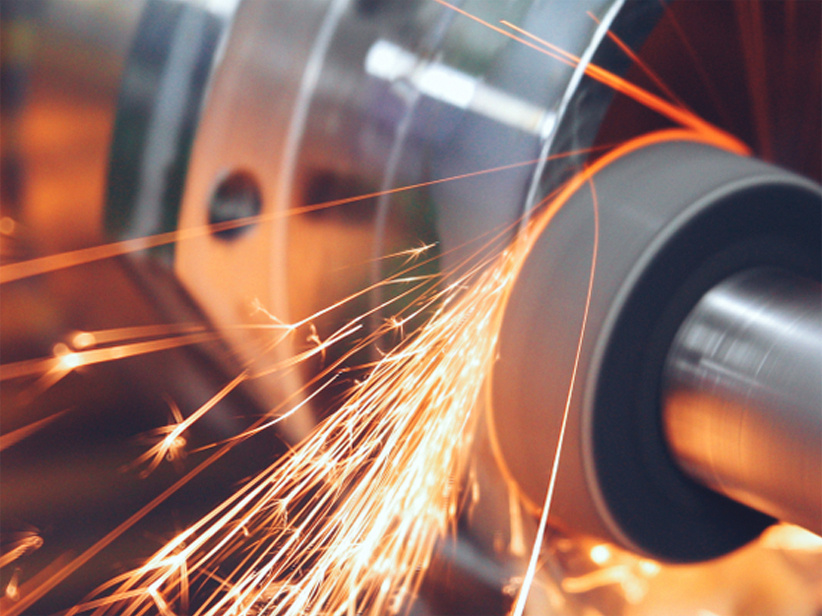
440C SS should always be machined in the annealed (soft) condition. Once hardened, it becomes very difficult to machine and requires grinding for material removal.
| Machining Parameter | Recommendation |
| Machinability Rating | ~45–50% of free-machining carbon steel (AISI B1112 = 100%) |
| Tooling | Carbide or high-speed steel (HSS) with sharp cutting edges |
| Cutting Fluids | Sulfurized or chlorinated oils — essential to prevent tool wear |
| Cutting Speed (turning, carbide) | 60–90 m/min (200–300 ft/min) |
| Feed Rate (turning) | 0.10–0.25 mm/rev |
| Depth of Cut | Moderate — avoid rubbing cuts (can cause work hardening) |
| Grinding (hardened state) | Aluminum oxide or CBN wheels; avoid overheating |
Key tip: 440C work hardens progressively during machining. Use consistent feed rates and avoid dwelling in the cut. Dull tools accelerate work hardening and degrade surface finish.
Welding 440C Stainless Steel
440C stainless steel is generally not recommended for welding due to its high carbon content. The heat from welding causes rapid hardening in the heat-affected zone (HAZ), leading to cracking. If welding is unavoidable:
- Preheat the base metal to 200–300°C (390–570°F) before welding
- Use ER309L or ER310 filler metal, do not use 308 or 316 filler
- Weld with the lowest practical heat input to minimize HAZ size
- Post-weld heat treat (anneal or full heat treatment cycle) immediately, do not allow the weld to cool to room temperature before treating
- Post-weld stress relief at 700–750°C (1290–1380°F) reduces residual stresses
Cold Working & Forming
In the annealed condition, 440C SS can be cold formed but work hardens rapidly — it is not suitable for deep drawing or severe cold bending. Light forming operations such as straightening and mild bending are feasible. Hot forming (above 900°C) is possible but must be followed by a full anneal.
| Application | Why 440C SS is Used | Key Property Required |
| Precision Ball & Roller Bearings | Withstands high Hertzian contact stress; resists surface fatigue over millions of cycles | 58–60 HRC hardness; high compressive strength |
| Surgical Instruments | Holds a sharp edge through repeated sterilization (autoclave) cycles; resists corrosion from bodily fluids | Edge retention; moderate corrosion resistance |
| Valve Seats & Balls (Oil & Gas) | Resists erosion and wear from high-velocity fluid and particulate flow; performs in lubricated environments | Hardness; wear resistance |
| High-End Knife & Cutlery Blades | Benchmark stainless knife steel — superior edge retention and resharpening characteristics vs lower-carbon grades | Hardness; edge retention; stainless nature |
| Pump Shafts & Impellers | Resists wear at sealing surfaces and journals; handles mild corrosive media such as oils and fuels | Hardness; moderate corrosion resistance |
| Aerospace Fasteners & Springs | High strength-to-weight ratio; performs in non-marine aerospace environments | High tensile strength; fatigue resistance |
| Gauge Blocks & Measuring Tools | Dimensional stability after heat treatment; hard surface resists wear from repeated contact | Hardness; dimensional stability |
| Dental Instruments | Tolerates sterilization; holds fine cutting edges required for precision dental procedures | Hardness; corrosion resistance |
| Nozzles & Orifice Plates | Resists erosive wear in fluid handling equipment processing mildly corrosive media | Wear resistance; hardness |
440C Stainless Steel Applications
Thanks to its strength and durability, 440C is used in a wide range of industries:
Common Applications:
- Bearings
- Valve components
- Pump shafts
- Surgical instruments
- Springs
- Cutting tools
- Aerospace components
Its ability to maintain sharp edges and resist wear makes it especially popular in precision engineering and tooling.
440C Stainless Steel Equivalent Grades
440C is known by different standards across the world:global co
| Standard | Grade |
| AISI | 440C |
| UNS | S44004 |
| DIN | 1.4125 |
| EN | X105CrMo17 |
These equivalents ensure global compatibility and ease of sourcing across regions.
440C Stainless Steel Standards & Specifications
440C is manufactured and supplied under various international standards:
- ASTM A276 440C - Bars & Shapes
- ASTM A580 440C - Wire
These standards define:
- Mechanical properties
- Dimensional properties
- Surface finish
- Testing requirements
440C Stainless Steel Forms Available
440C is available in multiple forms depending on application needs:
- 440C Stainless Steel wire
- 440C Stainless Steel bars
- 440C Stainless Steel rod
Each form is tailored for specific industrial uses:
- Wire - Springs, fasteners
- Bars - Machined component
- Rods - Shafts & precision parts
Things to check before procuring 440C Stainless Steel
Choosing the right supplier is critical. Before purchasing, ensure you verify:
- Hardness level (HRC)
- Heat Treatment Condition
- Compliance with ASTM standards
- Dimensional Tolerances
- Availability of Mill Test Certificate (MTC)
These checks ensure you get consistent quality and performance.
Why Choose Venus Wires for 440C Stainless Steel
440C stainless steel is the kind of material that does exactly what it claims to do: it has high strength, high hardness, and performs well under adverse conditions. It may not be the easiest to machine or the most resistant to corrosion, but when the need is for a product that lasts and performs with precision, it is hard to go wrong with it.
However, the quality of the stainless steel depends on the supplier that provides it. Whether it is for industrial equipment, tools, or medical equipment, the right supplier makes all the difference. Companies like Venus Wires that have been around for a while not only provide consistent quality in the stainless steel they provide but also the expertise that makes 440C stainless steel perform exactly as it needs to in real-world conditions.
FAQ's
Yes, 440C Stainless Steel is considered a premium-grade material due to its high hardness, excellent wear resistance and long service life. It is widely used in precision applications where durability and performance are critical
440C is a high carbon martensitic stainless steel known for its ability to achieve high hardness through heat treatment. It belongs to the 400 series of stainless steels and is commonly used in engineering and tooling applications.
440C stainless steel is equivalent to UNS S44004, DIN 1.4125, and EN X105CrMo17. These equivalent grades ensure compatibility across different international standards and sourcing requirements.
440C offers better corrosion resistance due to its chromium content, making it suitable for environments exposed to moisture. On the other hand D2 steel provides higher wear resistance, so the better option depends on the specific application.
440C stainless steel can achieve hardness levels of up to 58 HRC after proper heat treatment. This high hardness makes it ideal for applications requiring edge retention and wear resistance.
Yes, 440C offers moderate corrosion resistance due to its high chromium content. However, it is not as corrosion-resistant as grades like 316 stainless steel, especially in high corrosive or marine environments.
440C is commonly used in bearings, surgical instruments, valve components, and cutting tools due to its strength and durability. It is also widely used in aerospace and precision engineering applications where performance is critical.
440A, 440B, and 440C are three different types of the same stainless steel family known for their martensitic properties, with differences mainly based on their carbon levels. Type 440A is the least carbonized type of these three (carbon range 0.60% to 0.75%), which means it is also the least hard material type among all three (maximum hardness of 55 HRC), although it exhibits the best corrosion resistance and toughness among all three types. Type 440B falls in the middle (carbon range 0.75% to 0.95%, maximum hardness of 56 HRC), while Type 440C is the most carbonized type (carbon range 0.95% to 1.20%, hardness level 58 HRC to 60 HRC) with excellent wear resistance.
Indeed, while 440C stainless steel is resistant to corrosion to some degree, it can rust in specific situations. The presence of about 16-18% chromium creates a passive oxidation film that shields the metal from corrosion in slightly corrosive settings like freshwater, oil, and weak acids. Nevertheless, 440C stainless steel is not recommended for use in highly corrosive situations such as salt water (marine applications), continuous exposure to chlorides, and extremely acidic surroundings, as it may become prone to rusting (red discoloration) and pitting.
The density of 440C stainless steel is 7.7 g/cm³ (equivalent to 0.278 lb/in³ or 7700 kg/m³). This is consistent in both the annealed and hardened conditions, as heat treatment does not measurably change density.
The maximum hardness of 440C stainless steel requires a tempering process which should take place at 150°C (300°F) after the steel has undergone oil quenching from its austenitizing temperature range of 1010 to 1065°C. The process results in a hardness between 58 and 60 HRC. The low temperature tempering method results in minimal toughness enhancement which makes 315 to 425°C (600 to 800°F) tempering temperature more suitable for applications that need a better combination of hardness with impact resistance.
440C stainless steel is used in food-contact applications such as high-end kitchen knives and food processing cutting tools. In the hardened, polished condition, its surface is non-reactive with most food products. However, it is not ideal for wet food-processing environments with high chloride content (such as brine, salt solutions, or acidic foods) where 316 stainless steel would offer superior corrosion resistance. For cutlery and blades in normal kitchen use, 440C SS is perfectly safe and widely used by leading cutlery manufacturers.
The UNS (Unified Numbering System) designation for 440C stainless steel is S44004. It is also identified as DIN 1.4125 and EN X105CrMo17 under European standards, and as SUS 440C under the Japanese JIS standard.