




Applications of 430F Stainless Steel Bar in Automotive and Electrical Components
Components for the automobile and electrical industries require strength and the ability to be processed at high volume. The need for such materials inspired the development of 430F Stainless Steel Bar. 430F is a type of stainless steel known for its good machinability and notable corrosion resistance and dimensional stability. These characteristics allow 430F to be used to generate many of the types of machineable components. 430F is a good choice for most turning, drilling, and milling operations. It is quite useful for automated machining processes. This makes 430F a viable choice for many components of automobiles and electrical systems. Venus Wires provides stainless steel that fulfills the demand for consistent quality and exact dimensions for industrial applications.
What Is 430F Stainless Steel Bar?
430F is the free-machining variant of 430 stainless steel. Being a member of the ferritic stainless steel family, it contains sulfur to allow itself to be easily machined.
Sulphur content is what defines how easily a particular material is machined. Thus 430F Stainless Steel Bars are especially helpful in parts that need a lot of turning, drilling, milling, or threading. These bars can be particularly helpful in the mass production of complex parts.
430F also shows a good amount of resistance to corrosion in most indoor environments that are even mildly corrosive. At the same time it cannot fully replace stainless steel grades that show a higher degree of resistance to corrosion in more aggressive environments.
| Property | 430F Stainless Steel |
| Steel Type | Ferritic Stainless Steel |
| Machinability | Excellent |
| Corrosion Resistance | Good |
| Heat Treatment | Not hardenable by conventional heat treatment |
| Magnetic | Yes |
| Key Advantage | Free-machining characteristics |
| Typical Applications | Automotive, electrical & precision components |
Exact chemical composition and mechanical-property values should be aligned with the applicable material standard and Venus Wires' product datasheet.
Key Properties of 430F Stainless Steel Bar
Excellent Machinability
The sulfur addition is one of the defining features of 430F. It improves machinability compared with standard 430 stainless steel, making the grade suitable for operations such as:
- Turning
- Drilling
- Milling
- Threading
- High-volume machining
This makes 430F particularly relevant to manufacturers using CNC equipment and automatic screw-machine operations.
Good Corrosion Resistance
430F provides good corrosion resistance for many moderate environments. This makes it useful for components where some resistance to corrosion is required alongside efficient machining.
For highly aggressive environments, however, a different stainless steel grade may be more appropriate.
Good Dimensional Stability
Precision-machined components often require consistent dimensions across large production runs. 430F can be useful in applications where dimensional control and repeatability are important.
Magnetic Properties
As a ferritic stainless steel, 430F is magnetic. This characteristic can be advantageous for certain electrical, electromechanical, and engineering applications where magnetic response is a consideration.
Cost-Effective Machining
Improved machinability can contribute to efficient production by helping reduce machining time and tool wear in suitable manufacturing environments. This can be particularly valuable when large quantities of precision components need to be produced consistently.
Why Is 430F Stainless Steel Used in Automotive Components?
Automotive component manufacturing includes many processes that produce a large number of parts that require consistent dimensional tolerances. Depending on production costs, these processes require materials that can be machined consistently. Materials that can be machined consistently, resist corrosion, and provide cost advantages can be used for manufacturing automotive components.
430F is worth exploring for certain automotive components because of its combination of tantalizing dimensional and magnetic properties, along with machinability and corrosion resistance.
Common Automotive Applications
Potential applications include:
- Machined automotive fittings
- Fasteners
- Bushings
- Shafts and pins
- Valve components
- Fuel-system-related precision components
- Sensor and instrument components
- Other precision-machined parts
The suitability of 430F depends on the specific component's mechanical, corrosion, temperature, magnetic, and manufacturing requirements. It should not be assumed to be universally suitable for every automotive application.
Applications of 430F Stainless Steel Bar in Electrical Components
430F can also be useful for selected electrical and electromechanical components because of its machinability, dimensional stability, corrosion resistance, and magnetic properties.
Its ability to be efficiently machined makes it particularly relevant to smaller precision components manufactured in high volumes.
Common Electrical Applications
Potential applications include:
- Machined electrical hardware
- Connectors and fittings
- Instrument components
- Switchgear-related machined parts
- Small precision components
- Electrical equipment hardware
- Electromechanical components
Before selecting 430F for an electrical application, manufacturers should consider component-specific requirements such as electrical conductivity, magnetic response, corrosion environment, operating temperature, and mechanical performance.
430F Stainless Steel Bar vs 430 Stainless Steel
430F and standard 430 stainless steel share a ferritic structure and offer good corrosion resistance, but their primary difference lies in machinability.
| Feature | 430F | 430 Stainless Steel |
| Stainless Steel Type | Ferritic | Ferritic |
| Machinability | Excellent | Moderate |
| Corrosion Resistance | Good | Good |
| Sulfur Content | Higher | Lower |
| Magnetic | Yes | Yes |
| Main Advantage | Machining performance | General-purpose corrosion resistance |
430F is primarily selected when machining performance is a major consideration. Standard 430 may be preferred when improved forming characteristics and general-purpose corrosion resistance are more important.
430F Stainless Steel Bar vs Other Free-Machining Stainless Steels
When selecting a free-machining stainless steel, manufacturers may also compare 430F with grades such as 303 and 416.
The choice should take into account factors including:
- Machinability
- Corrosion resistance
- Magnetic properties
- Application suitability
- Formability
- Required component characteristics
430F can be attractive when manufacturers need the combination of ferritic stainless steel characteristics, magnetic properties, good corrosion resistance, and efficient machining.
Manufacturing and Machining Considerations for 430F Stainless Steel Bar
Machining
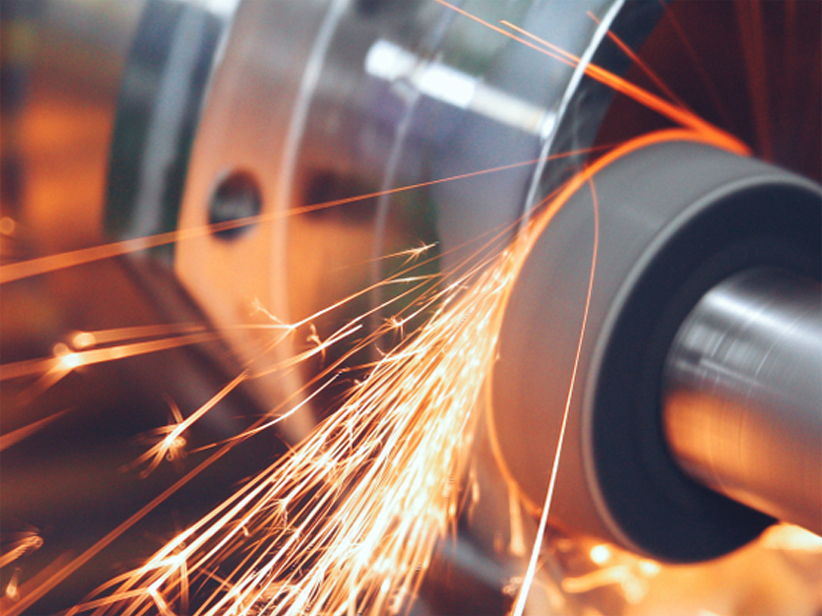
430F is particularly suited to high-volume CNC machining and automatic screw-machine operations. Its free-machining characteristics can make it easier to produce complex, precision-machined components efficiently.
Surface Finish
Surface finish is important for precision components because it can influence the appearance, dimensional performance, and functional characteristics of the finished part. Appropriate machining and finishing practices should therefore be selected according to the application.
Dimensional Tolerance
Automotive and electrical components often require close dimensional control, particularly where parts need to fit with other precision-machined components. Maintaining consistent tolerances is therefore an important consideration when selecting and processing 430F stainless steel bar.
Welding and Forming
The sulfur addition that improves machinability can make welding and forming less favorable compared with some other stainless steel grades. Therefore, applications involving significant welding or forming should be evaluated carefully before selecting 430F.
Benefits of Using 430F Stainless Steel Bar
The major benefits of 430F include:
- Excellent machinability
- Good corrosion resistance
- Good dimensional stability
- Magnetic properties
- Suitability for precision machining
- Efficient high-volume component manufacturing
- Good surface-finish potential
- Usefulness for selected automotive and electrical components
How to Select the Right 430F Stainless Steel Bar
Selecting the appropriate 430F stainless steel bar requires consideration of both the material and the manufacturing process. Buyers should evaluate:
- Required diameter and length
- Dimensional tolerances
- Machining method
- Required surface finish
- Corrosion environment
- Mechanical requirements
- Magnetic-property requirements
- Production volume
- Applicable material standard
- Inspection and testing requirements
Understanding these factors before procurement can help ensure that the material is compatible with the intended component and production process.
Why Choose Venus for 430F Stainless Steel Bar?
Consistency is an important aspect of procurement, material quality and dimensional accuracy for precision-machined components. Venus Wires is an established manufacturer and supplier of stainless steel and speciality alloy products, serving industrial applications with controlled manufacturing and quality processes. For 430F Stainless Steel Bar, Venus manufactures and supplies bars in different dimensions and specifications to meet precision machining and application-specific requirements. Venus Wires provides stainless steel products for industrial applications. Specifications can be customized according to size, surface-finish, quality checks, material traceability and technical support.
Venus Wires is a leading manufacturer and supplier of 430F Stainless Steel Bar and can work with the customers to understand their required dimensions, tolerances, surface finish, material specifications and application requirements.
Frequently Asked Questions About 430F Stainless Steel Bar
430F is used for precision-machined automotive, electrical, instrumentation, fittings, and general engineering components where efficient machining is important.
Yes. Its sulfur addition gives 430F significantly improved machinability compared with standard 430 stainless steel, making it suitable for high-volume precision machining.
Yes. It provides good corrosion resistance for many moderate environments. However, it is not intended to replace more corrosion-resistant grades in highly aggressive conditions.
Yes. 430F is a ferritic stainless steel and is magnetic.
430F cannot be hardened by conventional quench-and-temper heat treatment in the same way as martensitic stainless steel grades. Its properties are primarily controlled through its composition and processing.
The key difference is the sulfur content. 430F contains more sulfur to improve machinability, making it particularly suitable for high-volume precision machining.
Conclusion
The 430F Stainless Steel Bar is of particular value where manufacturers require a combination of good machinability, good corrosion resistance, dimensional consistency, magnetic properties and high volume production. Its free-machining characteristics make it well suited for such operations as turning, drilling, milling and threading.
With these features, 430F is a convenient selection for certain automotive, electrical, electromechanical, instrumentation and precision-engineering parts. However, the material should always be selected on the basis of the specific mechanical, corrosion, magnetic, temperature, dimensional and manufacturing requirements of the application.
Looking for a 430F Stainless Steel Bar for automotive, electrical or precision machined parts? Contact Venus Wires to discuss your required grade, dimensions, tolerances, surface finish and application needs.